
Post PureView: Graphene sensors and Trillion FPS cameras that can look around the corner
This is really two separate posts in one which I’m tying up together because they’re sort of related.
What happens now after PureView? Well, the first direct story is actually something Nokia’s looking into. Graphene sensors. Graphene is regarded as the new miracle nano material, famously presented in the Nokia Morph concept.
Check out BBC Click’s article on Graphene for more which showcases, Nokia Morph.
http://news.bbc.co.uk/1/hi/programmes/click_online/9491789.stm
UnwiredView reports that Nokia have filed a patent for  a graphene photo sensor.
Staska explains this would perform better than equivalent CMOS sensors in low light, as well as being much slimmer. Think of that PureView bulge being just as powerful in a smaller package. Think again were Nokia to remain being daring and stick even more power into PureView. Finally it would apparently be cheaper to produce.
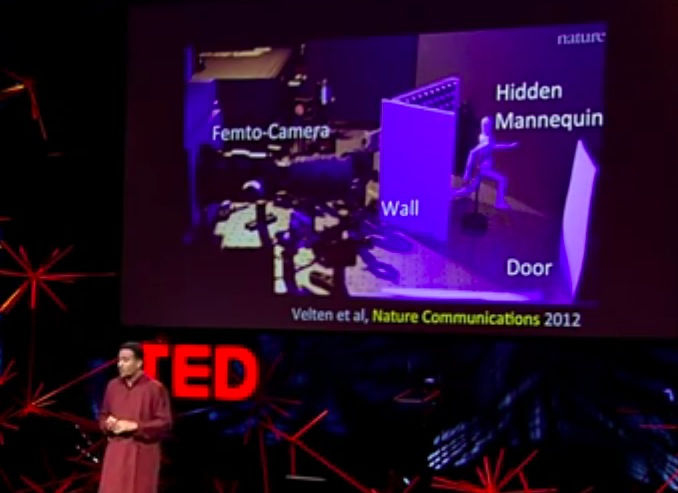
This is something in the very distant future with regards to this camera femto tech being in a phone. Similarly, and onto our next story, the 1000FPS camera. Watch the TED presentation. They actually make note of the fact that imaging should switch from thinking about more megapixels is better 😛 (well it is if you do it the Nokia way) and focus on the next dimension of imaging.
In this video you can see a pulse of photons on ‘video’ passing through a bottle of water. Â It’s quite amazing. To see a bullet played at the same speed, you’d be watching it for a whole year!
What can you do with this? Plenty of things. In the video they explain how it could be used to see if fruit is ripe. Well, not the coolest application. What does seem even more amazing is how they can use this technology to ‘see’ around corners.
They also envisioned this eventually arriving into phones, but again, quite far ahead into the future.
Whilst I’m here, let me stick a third one we might have mentioned before. Lytro – lightfield camera where you can choose the focus point AFTER you’ve taken the photo. It’s a bit like those 38mp camera – you choose to zoom in AFTER 😛
Cheers all for the Graphene tip!
Category: Nokia

About the Author (Author Profile)
Hey, thanks for reading my post. My name is Jay and I'm a medical student at the University of Manchester. When I can, I blog here at mynokiablog.com and tweet now and again @jaymontano. We also have a twitter and facebook accounts @mynokiablog and  Facebook.com/mynokiablog. Check out the tips, guides and rules for commenting >>click<< Contact us at tips(@)mynokiablog.com or email me directly on jay[at]mynokiablog.comSubscribe
If you enjoyed this article, subscribe to receive more just like it.


Connect
Connect with us on the following social media platforms.