
Nokia 808 PureView vs 13MP Sony Xperia T
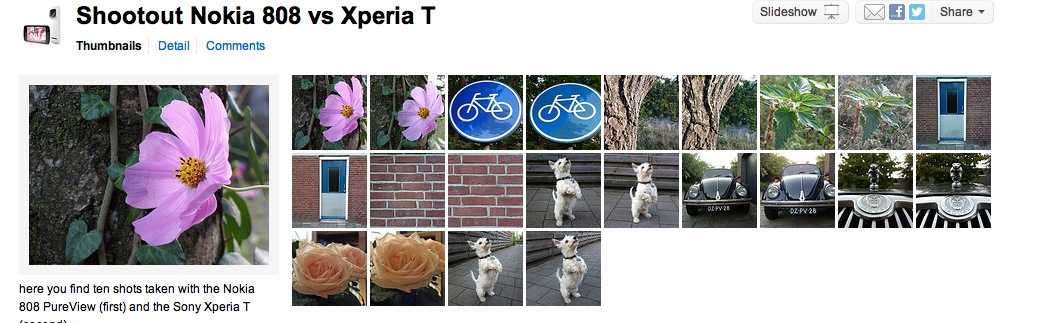
I saw Marc tweet his comparison between the Nokia 808 PureView and Sony Xperia T (13MP) this morning but I’ve been in the hospital all day (on placement) so I didn’t get to write about it then. I actually would have forgotten too so cheers also to zymo for the heads up!
The photos are available over at:
http://www.flickr.com/photos/pureviewclub/sets/72157631623067855/
Commentary at
Although the source name might suggest bias to the 808, it’s not. Quite rightly, Marc says “Â superiority of the Nokia 808 PureView is evident.”
The 808 is in the oversampling PureView mode (not hyperdetail 38mp mode).
I prefer the colours from the 808 as well as the clarity and level of pleasing natural bokeh. Some great stuff from Sony too though – long time rivals of Nokia in the mobile imaging space (as Sony Ericsson).
Cheers Marc, Zymo and miki69 for the tip!

About the Author (Author Profile)
Hey, thanks for reading my post. My name is Jay and I'm a medical student at the University of Manchester. When I can, I blog here at mynokiablog.com and tweet now and again @jaymontano. We also have a twitter and facebook accounts @mynokiablog and  Facebook.com/mynokiablog. Check out the tips, guides and rules for commenting >>click<< Contact us at tips(@)mynokiablog.com or email me directly on jay[at]mynokiablog.comSubscribe
If you enjoyed this article, subscribe to receive more just like it.


Connect
Connect with us on the following social media platforms.